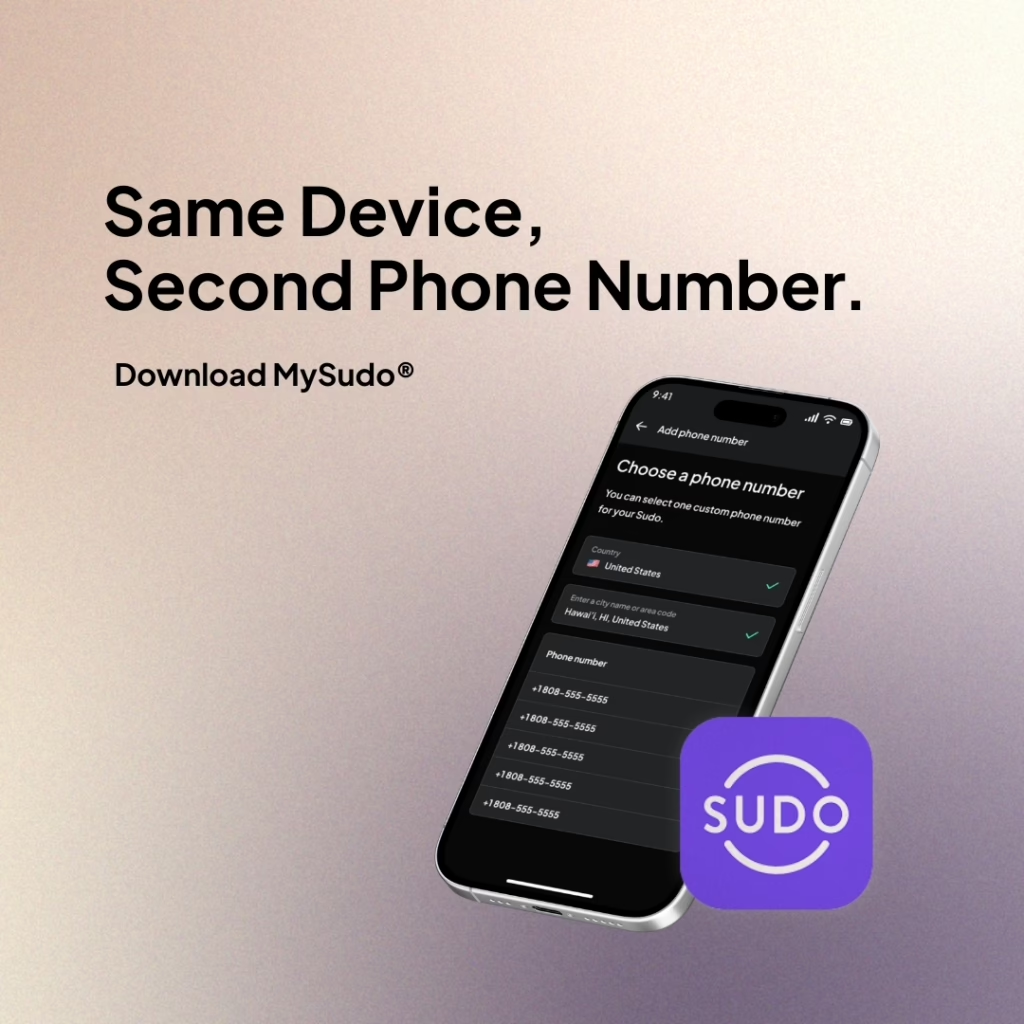
Telephony refers to any technology that enables voice communication over a distance. It started with landline telephones using copper wires and has evolved to include mobile networks, Voice over Internet Protocol (VoIP), and app-based calling. Today, telephony covers everything from traditional phone calls to internet-based voice and video communication.
At Anonyome Labs™, we believe telephony should be private by design. This article explains how modern calling works, why traditional systems are vulnerable, and how tools like MySudo® are redefining how we communicate without exposure.
Traditional telephony relies on circuit-switched networks like the Public Switched Telephone Network (PSTN). Modern telephony uses packet-switched networks, the same system that runs the internet. This shift allows calls, texts, and even video to travel as encrypted data packets rather than open voice signals.
Modern telephony includes:
Cellular communication (3G, 4G, 5G)
VoIP services like Zoom, Skype, or WhatsApp
Privacy apps such as MySudo®, which use secure internet channels to make voice and text communication safer and more flexible.
VoIP stands for Voice over Internet Protocol. It’s a technology that allows you to make and receive calls over the internet instead of through a telephone company’s traditional phone lines. Examples include Zoom, Microsoft Teams, and MySudo’s secure voice calling feature.
VoIP offers lower costs, global reach, and advanced features—but without the right privacy protections, it can also expose user data.
A phone number is more than just digits—it’s an identifier that connects to your personal data. Carriers link your number to your name, address, device, and billing information. Businesses and scammers alike use it to track, verify, or target you.
That’s why modern privacy tools are changing the model: MySudo lets you create multiple private phone numbers, each tied to a unique digital identity, so you can keep your real number private.
Because it’s connected to so many systems:
Banking and two-factor authentication (2FA)
Social media and email accounts
Retail loyalty programs and subscriptions
When your number appears in a data breach, it can lead to identity theft, spam, or SIM-swapping attacks. In today’s digital economy, a phone number functions like a “digital fingerprint.”
SIM Swapping – Attackers hijack your mobile number by convincing a carrier to transfer it to another SIM card.
Caller ID Spoofing – Scammers fake their caller ID to look legitimate.
Robocalls and Spam – Automated systems harvest phone numbers to target users.
Metadata Exposure – Even encrypted calls can reveal who called whom, when, and for how long.
Data Breaches – Exposed numbers can link you to your personal and financial accounts.
MySudo mitigates these risks by giving you virtual numbers not tied to your carrier or personal data.
A virtual number is a phone number that isn’t linked to a physical SIM card or fixed line. It routes calls and messages over the internet, allowing you to use it on multiple devices or discard it when no longer needed. Virtual numbers are ideal for online shopping, job searches, dating, or business—anywhere you want to communicate without revealing your real identity.
MySudo provides users with multiple private phone numbers (called Sudos). Each Sudo® can have its own phone number, email, and handle for messaging or calling. You can keep one for work, another for personal use, another for online transactions—each fully separated from your real number and identity.
End-to-end encryption (E2EE) ensures that only the sender and recipient can access call or message content. Even the service provider cannot read or listen to it. Traditional phone calls are not encrypted; VoIP and secure calling apps like MySudo use E2EE to prevent interception or unauthorized recording.
For traditional phone calls, yes—calls travel through carrier infrastructure, and while direct listening is restricted by law, the metadata (caller, duration, location) is routinely logged and can be accessed via subpoena or breach. Encrypted apps, by contrast, use cryptographic keys that prevent the provider (or anyone else) from eavesdropping.
Telephony falls under various privacy and communication regulations:
GDPR (Europe) and CCPA (California) require explicit consent for storing or sharing personal contact information.
TCPA (U.S.) regulates telemarketing and robocalls.
HIPAA covers voice communication containing health data.
MySudo helps users comply with these principles by minimizing the collection and exposure of personally identifiable information (PII).
SIM swapping happens when criminals trick your mobile provider into transferring your number to their SIM card. Once they control your number, they can intercept Two-Factor Authentication (2FA) codes, reset passwords, and gain access to your accounts.
Prevention tips:
Set a PIN or password with your mobile carrier.
Avoid sharing your phone number online.
Use apps like MySudo for sensitive communications—since MySudo numbers are not carrier-based, they can’t be SIM-swapped.
Use multiple virtual numbers to separate personal and public activity.
Avoid linking your real number to websites or accounts unnecessarily.
Enable two-factor authentication through an authenticator app rather than SMS.
Use privacy-first apps like MySudo for calling, texting, and emailing.
Keep your device and apps updated to prevent exploits.
Private telephony means using technology that gives individuals control over what data is shared when they communicate. Instead of your identity being embedded in your phone number, you decide what information to reveal. Tools like MySudo make this possible by combining encrypted communication with decentralized identity management.
Emerging trends include:
AI-driven spam detection and call verification.
Decentralized identifiers (DIDs) for verified yet privacy-preserving identity.
Integration of voice and blockchain technologies.
Voice deepfake detection for fraud prevention.
Virtual and app-based communication ecosystems (like MySudo) replacing physical SIM numbers.
The direction is clear: telephony is moving toward identity-controlled, encrypted, and decentralized communication.
MySudo:
Lets you create multiple secure phone numbers under one account.
Encrypts your calls, texts, and emails end-to-end.
Removes your personal phone number from exposure risks.
Gives you control over who can reach you (and how).
It’s privacy-by-design telephony for a world where your number should no longer be your identity.