Data brokers, spammers, and scammers

The connection between data brokers, spam, scams, and robocalls

Spam, scams, and robocalls don’t happen by accident; they’re fueled by data. Data brokers collect, combine, and sell personal information at scale. Scammers and spammers often use that information to target people with unwanted calls, texts, and other attacks.

This article shows how data brokers make scams and spam possible. It also explains the data they use, what can happen because of it, and how you can protect yourself.
Quick summary

  • Data brokers aggregate information from public records, apps, purchases, and trackers to create profiles.
  • Spammers, fraudsters, and telemarketers buy or access that data to craft targeted messages and to prioritize high-value targets.
  • Robocall campaigns use lists of phone numbers plus contextual metadata (e.g., age, income, recent purchases) to boost response rates.
  • You can lower your risk in a few ways. Opt out of data brokers, limit tracking, use privacy tools, and block unwanted calls.

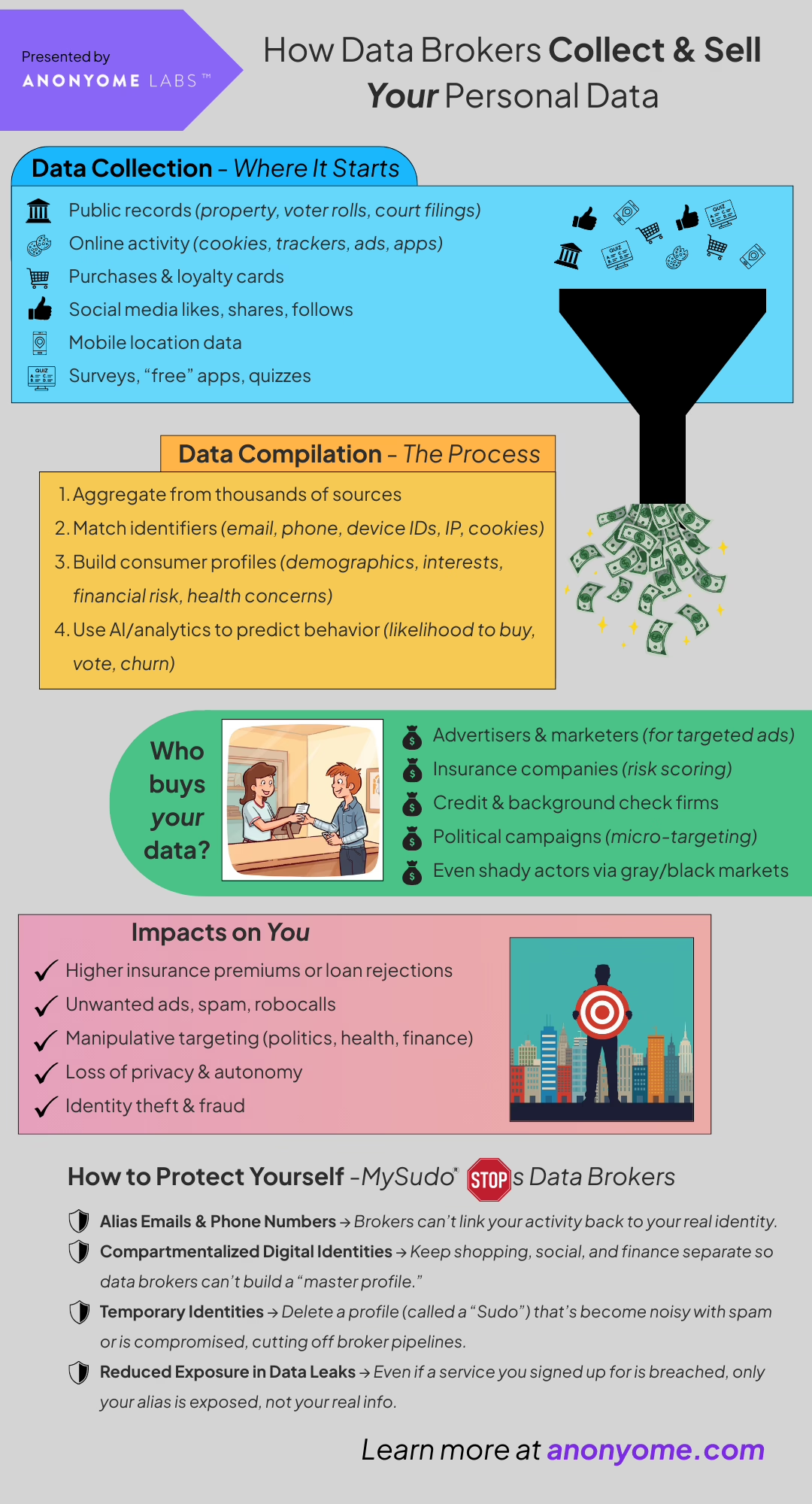
How Data Brokers Collect & Sell Your Personal Data Infographic

Checkout our infographic on how data brokers collect and sell your data. Learn about their process and ways that you can protect yourself online.

How data brokers feed the spam/scam ecosystem

Data collection and enrichment

Data brokers pull information from many sources. Data brokers pull information from many sources. These include public records like property and voter rolls, commercial data such as loyalty cards, and purchase histories.

They also collect data from mobile apps, social media, and web trackers. Data brokers don’t just store basic contact details.

They also include guessed information, such as household income, political views, age group, and recent life events. This can be things like having a new baby or moving. They also consider how likely someone is to buy certain products.

Segmentation and scoring

Brokers segment people into categories and assign scores (e.g., propensity to purchase, credit risk). This allows buyers to target specific groups. For example, they can reach people aged 30 to 45 who recently moved and are likely to refinance. People often use these lists for mortgage robocalls or phishing attempts.

Distribution & resale

Aggregated lists get sold or licensed to marketing firms, lead-generators, and sometimes less-scrupulous actors. Those buyers often resell or combine the lists. This multiplies their reach and makes it hard to track who ultimately uses the data.

Automation + telephony

Telemarketing platforms and robocall services integrate with these lists. Add an auto-dialer or SMS blast, and you can call tens of thousands of high-value targets for a small cost. Automation also lets scammers test different scripts and phone numbers quickly. They can see what works best and adjust their campaigns in near real time.

Specific ways brokers enable spam, scams, and robocalls

  • Targeted marketing: Legal telemarketers use broker lists to find receptive audiences. But the line between marketing and intrusion is thin.
  • Spear-phishing / vishing: Scammers use personal details to make their attacks more believable. They will use recent purchases, employer, or family situation, to create believable voice phishing (vishing). These attacks trick people into giving up credentials or money.
  • Lead-generation mills: Some companies buy cheap lists to create leads. Businesses then buy these leads, which can lead to repeated calls from multiple vendors.
  • Number spraying and spoofing: Brokers provide phone numbers. Scammers use spoofing and mass dialing to impersonate trusted institutions, which increases the chance that someone answers.
  • Microtargeted scams: Fraudsters use niche lists, such as owners of vacation homes, to push specialized scams. These scams are more convincing and often more profitable.

Data types most commonly abused

  • Phone numbers (mobile and landline): the obvious vector for calls/SMS.
  • Name + address: adds credibility to scam messages.
  • Email addresses: used for phishing and credential stuffing.
  • Recent life events (marriage, moving, childbirth): make social-engineering lures persuasive.
  • Financial and purchase info: used to pitch scams that appear financially relevant.
  • Location history: for in-person fraud or timing calls when someone is likely away from home.

Real-world impacts

  • Higher scam success rates: Personalization makes people more likely to trust the caller or message.
  • Repeat harassment: People redistribute lists, and once your number circulates, multiple actors may bombard you.
  • Financial harm and identity theft: Scammers pretend to be banks or government agencies. They trick people and take their money.
  • Privacy erosion and stress: Constant intrusions make people trust digital services less. They also create stress and mental fatigue.

Why regulation and enforcement struggle

  • Opacity: Brokers are many and often hidden behind corporate layers, making oversight difficult.
  • Data resale: Even if a company stops sharing, previously sold data may remain in circulation.
  • Cross-jurisdiction complexity: Arises because different regions enforce varying rules; what one place deems illegal may receive permission elsewhere.
  • Economic incentives: Data monetization is lucrative, so enforcement competes with powerful business interests.

Practical steps to protect yourself

For individuals

  1. Register on Do Not Call lists and file complaints for illegal robocalls.
  2. Opt out of major data brokers. Use broker opt-out pages and services that make the process easier.
  3. Limit data sharing: Avoid unnecessary forms, unsubscribe from marketing lists, and be sparing with loyalty programs.
  4. Use tools that protect your privacy. Track-blocking browsers, DNS/AD blockers, and apps that limit location sharing can help reduce data leaks. MySudo-style aliases and burner numbers can keep your real number private.
  5. Use privacy-protecting tools: Block trackers and ads in your browser, and use apps that stop sharing your location to protect your data.
  6. Be skeptical and verify: Don’t share personal or financial details on unexpected calls. Hang up and call a number you know is real.
  7.  

For businesses and product teams

  1. Don’t buy sketchy data lists. Check where consumer data comes from and require clear proof of its source.
  2. Implement consent-first data practices. Obtain and log explicit consent for contact info and sharing.
  3. Design privacy into products. Use aliasing, ephemeral identifiers, and minimize PII collection.
  4. Educate users. Give people clear steps to block robocalls and opt out.
  5. Partner responsibly. Choose partners and vendors that follow strong privacy and security practices.
  6.  

What privacy tech can do

  • Alias phone numbers and emails: Let users transact without exposing core contact details.
  • Tracker blocking and anti-fingerprinting: Reduce the building blocks brokers need to connect profiles.
  • Automated broker opt-out tools: Help users remove themselves from the biggest broker lists at scale.
  • Secure communication channels: Encrypted voice/SMS and identifier minimization reduce the value of intercepted metadata.

Key takeaways

  • Data brokers help power modern spam, scams, and robocalls. They supply the targeted lists and personal details that make these attacks work.
  • The problem is structural. Even with laws in place, people still spread data widely, and it becomes hard to take back once someone sells it.
  • Individuals can significantly reduce risk through opt-outs, privacy hygiene, and privacy-first tools (like aliases and burner numbers). Businesses should pay attention to consent. They need to know where contact data comes from.
Topic
Sub Topics

Data Brokers and Scammers

Actionable checklist
(one minute)

  • Register on your country’s Do Not Call list.
  • Run an opt-out sweep against the top 10 data brokers.
  • Turn on carrier spam protection and install a reputable call-blocking app.
  • Use alias numbers/emails for online signups and marketplaces.
  • Educate family and employees about vishing tactics and verification practices.
  • Download and start using MySudo®