Most people use one identity online. One email address across dozens of accounts, one phone number handed to retailers, strangers, apps, and services, and one set of payment details entered into checkout form after checkout form.
It feels convenient, but it isn’t particularly private or safe.
Every service that holds your personal details is a potential breach risk. Every retailer with your email address is a future source of marketing messages. Every app with your phone number is another entry point for scammers and data brokers who trade in personal information at scale. And increasingly, AI-powered advertising, analytics, and profiling systems can connect data points that seem harmless in isolation to build detailed pictures of who you are, what you buy, where you go, and how you behave online.
The problem is simple: most people give away their personal identity far more often than they need to.
A Sudo changes that.
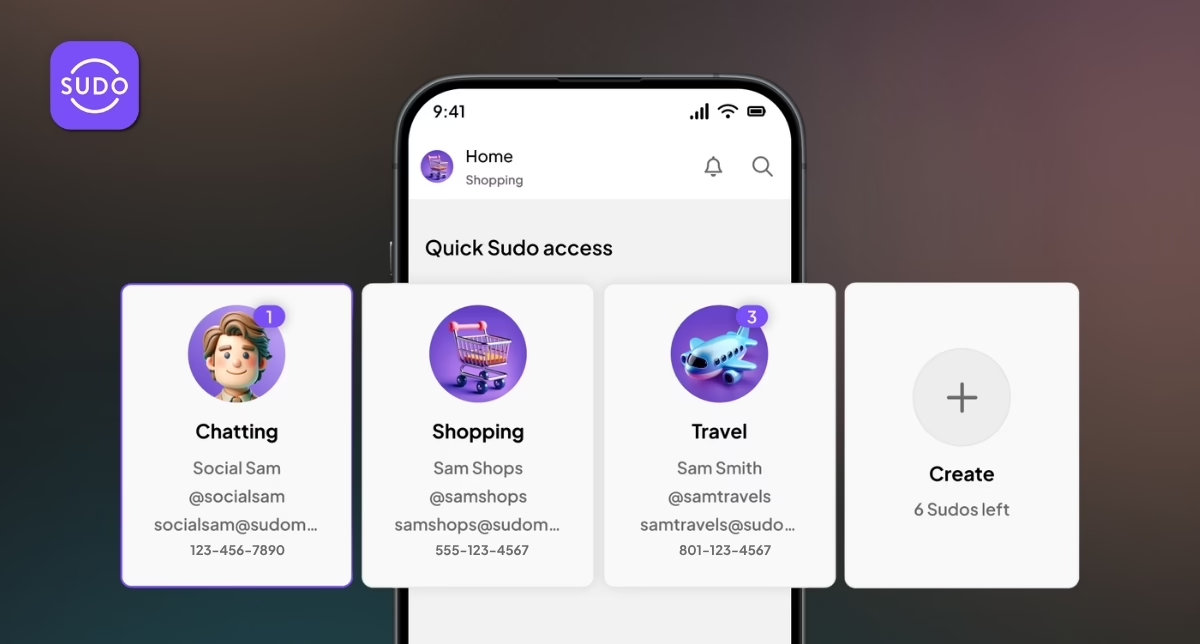
A Sudo is a real, functioning alternative identity with its own email address, phone number, private browser, handle, and virtual card. Instead of giving retailers, apps, free trials, contractors, marketplace buyers, and other third parties your personal details, you give them a Sudo. They get a way to contact or transact with you. You keep your personal identity private.
This article covers what a Sudo is, what it includes, how Sudos give you control, privacy, and safety, how they help protect you from scammers, data brokers, and identity thieves, and how to get started with Sudos in the MySudo app in under two minutes.
A Sudo is a digital identity
A Sudo is a complete, real, functioning digital identity that you use in place of your personal one.
A Sudo gives people and services everything they need to communicate and transact with you without requiring your personal email address, phone number, or payment details.
Sudos are in the MySudo app. Each Sudo includes:
- 1 email address: A secure, encrypted inbox for end-to-end encrypted emails with other MySudo users, and standard email with everyone else. Each Sudo gets its own inbox, manageable from the MySudo app and also accessible on desktop.
- 1 handle: A unique identifier for end-to-end encrypted messages, voice calls, video calls, and group calls with other MySudo users, without needing to share a phone number.
- 1 private browser: Blocks ads and tracker cookies by default, with a separate browsing history for each Sudo and a built-in site reputation service. Search freely without being tracked.
- 1 phone number (optional, paid plans only): A real, working number for end-to-end encrypted messaging, voice, video and group calls with other MySudo users, and standard calls and SMS/MMS with everyone else. Customizable, mutable, and available for US, Canada, and UK numbers. Useful as an alternative phone number for online shopping, marketplace transactions, travel bookings, local services, and anywhere you don’t want to share your personal number.
- 1 virtual card (optional, paid plans only, US only): A proxy for your credit card or debit card that keeps your personal financial details away from merchants. Usable online and over the phone, and closeable at any time.
The word Sudo comes from “pseudonym.” Authors and performers have used pseudonyms for centuries (think Dr Seuss and Mark Twain). A Sudo brings the same idea online, except it is more than a name; it is a complete identity that sits alongside your personal one.
You use a Sudo wherever your personal details would otherwise go, like the checkout form, the signup page, the contractor who needs a number to confirm your appointment, the rideshare driver, the food delivery app, or the stranger on a marketplace platform who needs a way to reach you to buy your secondhand bike.
You can run different Sudos for different parts of your life, like shopping, travel, local services, apps you’re trying out, restaurant bookings, hotel stays, and anyone you’re not sure about yet.
With a Sudo, they all get what they need, but you keep your personal identity to yourself.
A Sudo is not a fake name or a burner account. It is a real and functioning identity that simply isn’t linked to your personal one – because not every interaction you have online requires your personal information. A Sudo gives you the choice of when to share your identifying information and when not to.
Sudos are about control, privacy, and safety
Each Sudo contains its own data trail, but none of them lead back to you. This gives you control, privacy, and safety.
Control means deciding who can reach you and what they can find out about you when they try. Right now, most people don’t have that. Once your email address or phone number is in someone else’s database, you’ve lost the ability to manage what happens to it. It can get shared, sold, and exposed in breaches. You can unsubscribe from a mailing list, but you can’t un-share the email address you used to sign up.
A Sudo gives you contact information you can actually manage. If a Sudo email starts attracting spam, it either doesn’t bother you because it’s separate from your personal one or you deal with that Sudo. If a Sudo number gets misused, same deal. Your personal details were never involved, so they’re never compromised.
Privacy is about boundaries, not secrecy. You lock your front door not because you’re hiding something, but because you want to control who comes in. Online interactions work exactly the same way. A company doesn’t need permanent access to your primary email. A marketplace buyer doesn’t need your personal phone number. A free trial doesn’t need a lasting connection to your identity. The less you expose, the fewer ways there are for things to go wrong.
Safety is where it gets serious. Your phone number and email address are two of the primary ways scammers, identity thieves, and bad actors reach people online. They are often used in phishing attacks, account takeover attempts, identity theft schemes, and social engineering scams.
And then there’s the quieter threat of data brokers. There are estimated to be thousands of data brokers globally. Their business model revolves around collecting, analyzing, and selling personal information such as email addresses, phone numbers, purchase history, and location data to advertisers, marketers, and other organizations.
AI-powered profiling systems can make this even more powerful by drawing connections between data points that appear unrelated on their own. The more information connected to your personal identity, the easier it becomes to build an increasingly detailed picture of your habits, interests, relationships, finances, and behavior. A Sudo helps break those connections before they form.
Why use a Sudo instead of your personal email or phone number?
Most of the time when an app, retailer, or service asks for your email address or phone number, they don’t need your personal one; they simply need a way to contact you.
A Sudo gives them that without the consequences: no spam in your primary inbox, no personal details in their database, and less exposure if they experience a breach.
There are many situations where a Sudo makes obvious sense:
Online shopping
Every retailer you buy from stores your email address and, often, your phone number. They use them for marketing, account management, and communications. If they experience a breach, those details may be exposed.
A shopping Sudo keeps your personal details out of retail databases entirely.
Signups and free trials
A new app, a website offering a discount in exchange for your email address, and a service you only intend to try once are all situations where you want access without creating a permanent connection to your personal identity.
A Sudo works like a private email address and alternative phone number dedicated to signups and trials.
Marketplace transactions and strangers
Selling something on Craigslist or Facebook Marketplace, hiring a contractor, arranging a local service, or meeting someone new are situations where people need a way to contact you, but don’t necessarily need your personal details.
A Sudo lets you stay reachable without exposing your primary identity.
Keeping different parts of your life separate
Separate identities mean less noise, better organization, and cleaner boundaries. Shopping can stay separate from travel. Subscriptions can stay separate from personal communications. New services can stay separate from the accounts you rely on every day.
Starting fresh
If your email inbox is drowning in spam or your phone number is attracting calls you don’t want, a Sudo gives you a clean identity without requiring you to change your actual personal details. It’s a second chance at control, privacy, and safety.
Using a Sudo as an alternative phone number
Many people look for a second phone number because they don’t want to share their primary number everywhere they go online.
A Sudo phone number gives you a real number that works for domestic and international calls and texts without exposing your personal number.
Use it for:
- Online shopping
- Marketplace transactions
- Food delivery services
- Travel bookings
- Contractors and local services
- Dating apps
- Short-term projects.
Because the number belongs to a Sudo, it remains separate from the rest of your life. If you stop using it, you haven’t exposed your personal number in the process.
MySudo vs other privacy tools: what’s the difference?
There are other tools that cover pieces of what a Sudo does:
- Masked email services like Apple’s Hide My Email or SimpleLogin generate alternative email addresses that forward to your primary inbox. But they’re email only.
- Virtual card services like Privacy.com create disposable or merchant-locked payment cards to protect your real bank details. But they’re payment only.
- Second phone number apps like Google Voice give you an additional number for calls and texts. But they’re one number, with no email address or payment protection attached.
- Password managers are increasingly offering masked email features, but that’s still only email.
The difference with a Sudo is that it combines all of these into a single, coherent identity: email address, phone number, and virtual card together, organized by purpose, and managed from one app. There is even a private browser for ad and tracker free browsing, plus a handle for free end-to-end encrypted calling and messaging with other MySudo users.
With a Sudo, you’re not stitching together four separate tools and hoping they work as a system. A Sudo is the system.
Most privacy tools protect one thing. A Sudo protects your identity across all of it.
How many Sudos can you have?
You can create up to nine Sudos.
Most people find that a handful covers everything they need: one for shopping, one for travel, one for apps and trials, one for online dating, one for marketplace transactions, one for newsletters, and so on.
The number matters less than giving each one a clear purpose.
Getting started with a Sudo takes 2 minutes
- Download MySudo on iOS or Android. No username, no password, and no personal details required to get started.
- Create your first Sudo. Give it a purpose. Use it for the next thing that asks for your email address or phone number.
- For desktop, install the MySudo browser extension on Chrome, Firefox, Safari, or Edge. Open the MySudo app, tap Menu, then Link browser extension, and scan the QR code on your screen. From that point, the extension autofills your Sudo details (name, email, phone number, and virtual card) directly into checkout and signup forms. No typing. No handing over your real details.
Start with one Sudo – but most people don’t stop there.
FAQs
What is a Sudo used for?
A Sudo is used anywhere your personal email address, phone number, or payment details would otherwise be required but aren’t genuinely necessary. Online shopping, app signups, free trials, marketplace transactions, local services, newsletters, and travel bookings are all common examples.
Is it legal to use a Sudo?
Yes. A Sudo is a legitimate alternative identity that you choose to use instead of your personal details. The email address, phone number, and virtual card all function normally. You’re simply choosing not to share more personal information than necessary.
Do businesses know I’m using a Sudo?
Generally, no. Businesses simply see a working email address, phone number, or payment card. From their perspective, they’re just communicating with a customer.
What happens if someone calls my Sudo number?
The call comes through to your MySudo app just like a normal call. You can answer, decline, or let it go to voicemail. The caller sees your Sudo number, not your personal one.
Can I reply to emails sent to my Sudo address?
Yes. Emails sent to your Sudo address arrive in the MySudo app and you can reply directly from there. The recipient sees your Sudo email address, not your personal one.
What’s the difference between a Sudo and a VPN?
A VPN helps protect your browsing traffic and IP address. A Sudo protects the contact and payment details you hand over to services, businesses, and strangers. They solve different privacy problems and work well together. Check out MySudo VPN.
How is MySudo different from Apple’s Hide My Email or Privacy.com?
Apple’s Hide My Email protects your email address only. Privacy.com protects your payment details only. MySudo combines email, phone number, virtual card, private browsing, and encrypted communications into a single alternative identity.
What should stay on my personal identity?
Your bank, healthcare providers, government services, employer, and personal relationships. Anything that requires your legal identity or official correspondence should stay connected to your primary details. Everything else is a candidate for a Sudo.