You’re Being Tracked More Than You Think
Every time you browse a website, open an app, or click a link, data is being collected about you. Not just what you do, but:
This is ad tracking, and it fuels the $1.3 TRILLION dollar ecosystem built on your behavior. Many people try to limit it with ad blockers or private browsing. But while you can block trackers, you can’t stop tracking if your identity stays the same. To understand why, you need to look at how ad tracking really works.
Ad tracking is the process of collecting and combining data about your activity across websites, apps, and services to build a detailed profile of you. That profile is used to:
Common tracking methods include:
But the most important thing to understand is this that tracking isn’t just about data—it’s about identity.
Ad tracking isn’t just annoying—it has real implications for your privacy and control.
Even if you clear cookies or browse privately:
…can reconnect your identity across platforms.
Data brokers collect your information and sell it repeatedly:
You’re not just being tracked—you’re being packaged and resold.
Once your data is linked:
Tracking can impact:
Over time, your digital profile starts shaping your reality.
Many people try to reduce tracking using tools like:
These tools are helpful—but incomplete. They focus on blocking signals, not breaking identity.
As long as your activity ties back to the same identity, tracking can reconnect the dots.
Ad tracking works because everything points back to you. Across your digital life, you reuse:
This allows companies to:
This is called identity linking—and it’s the foundation of modern tracking.
Instead of trying to block every tracker, break the connection between your activities.
Compartmentalization means separating your digital life into distinct identities that cannot easily be linked together. Instead of one unified identity, you create multiple.
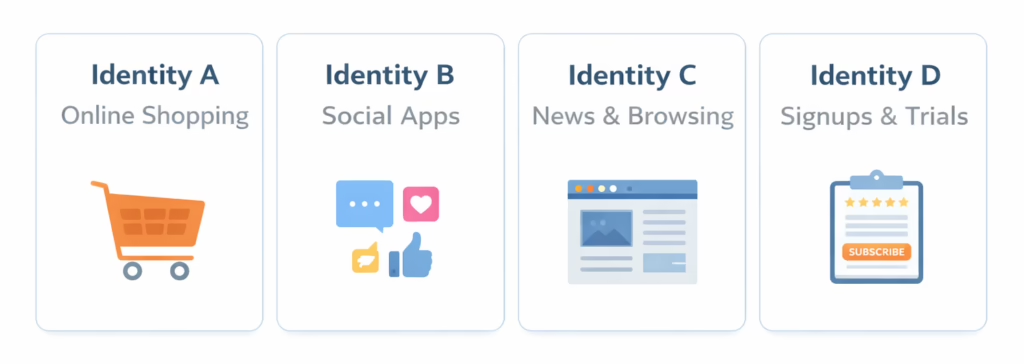
Each identity has:
Compartmentalization disrupts identity linking, the core mechanism of tracking. Activities stay isolated instead of being combined. It reduces data broker value. Instead of one rich profile, brokers get:
It limits tracking effectiveness. Ads become:
Think of it this way. Most privacy tools try to make you invisible. Compartmentalization does something more powerful: It makes you unrecognizable across contexts.
To effectively compartmentalize, you need the ability to:
Platforms designed around this model allow you to:
You can’t fully stop companies from collecting data. But you can stop them from connecting it.
Privacy isn’t about hiding your activity; it’s about separating your identity. That’s exactly what MySudo® lets you do.
Ad Tracking